April Updates

April was great at Tutor Platform. We've not only come up with many ways to improve our client's day to day work with Tutor Platform, but also with a way to improve the lives of people who have never heard of Tutor Platform. More about that in the Upcoming section.


The buzz this month


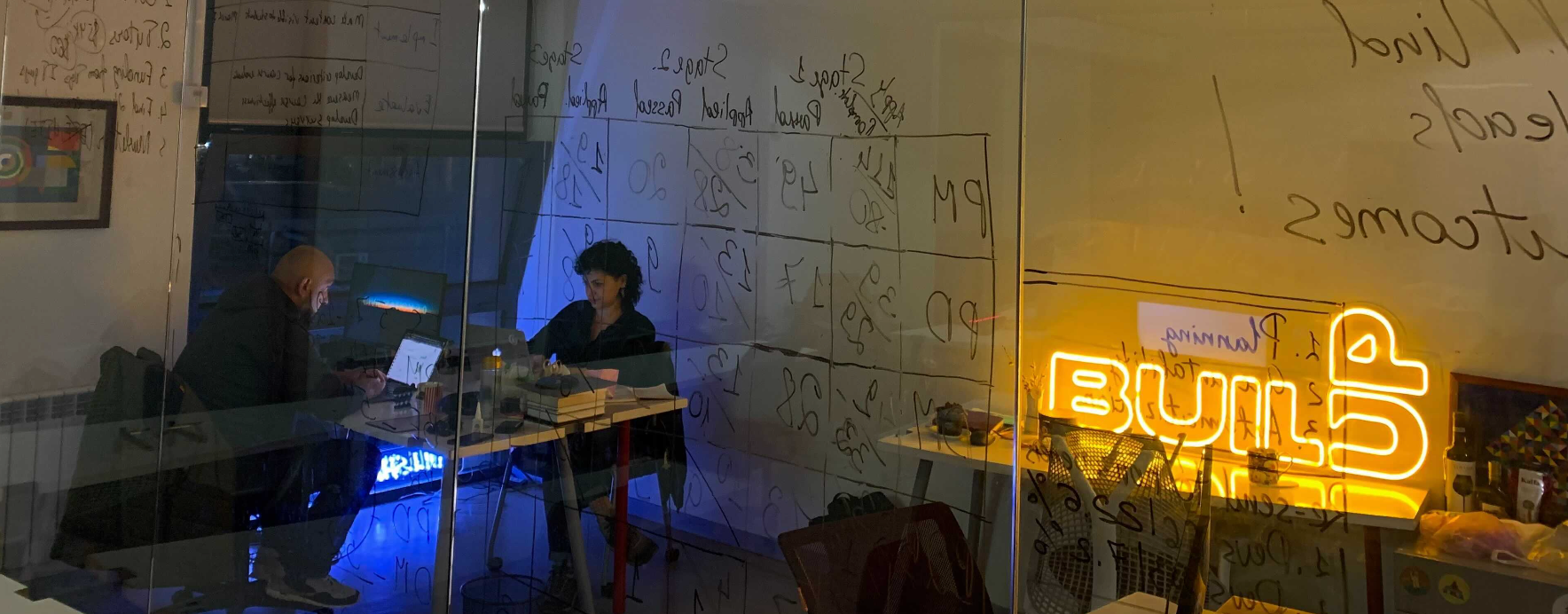
Tutor Platform has partnered up with BuildUp to create the perfect space for goal-oriented projects. The thing is, BuildUp is starting a product-based technology bootcamp to enable many talented individuals with the right kind of skillset that will help them to the next level in their career. BuildUp is bringing in a whole Armenian IT community of over 200 leaders, directors and CEOs from all over the world, that will invest in the emerging local talent. BuildUp has developed a very special curriculum for 6 different programs, supporting all aspect of a product's lifecycle. These curricula are based on a goal-oriented OKR model, that has been making rounds in the IT for quite some time now.
OKRs (objectives and key results) are a layer of measurable, goal-based management that a majority of teams or even whole companies incorporate in their workflows. The O in OKR stands for the objective. For example, increase environmental footprint awareness or reduce plastic use. While the KR stand for key results, signifying the way you measure results and know you've achieved the goal. So an OKR with the above mentioned topics could read something like this: I will increase environmental footprint awareness as measured by the amount of people I come in contact with that are aware of the impact they've made today. Or, I will reduce plastic use as measured by the number of bottles I have to send to the garbage in three months.


To facilitate such a workflow on Tutor Platform we had to build a set of solutions that would support OKR-based learning and promote task completion among students, as well as give them better access to knowledge through our Interactive Books and the ability to book one-on-one sessions in calendar. Here's a list of features for BuildUp, that we plan to release for all of our users soon.


  • OKR widget in Interactive Books - this widget will support goal-oriented learning, product development and PBL. The OKR widget also introduces APIs for you to access all data about learning.
  • Teams - one more dimension introduced to the already existing groups and courses
  • Booking teacher's available hours - go directly to the calendar to view teacher's or mentor's available hours and book them right from there.


New features

  • You can now export your Interactive books as PDF files.
  • Find payment records in Finances, easy way to keep track of school earnings and an easier way to export to different formats.
  • There is now a Forum feature, that enables deep-dive discussions in threads, available to all users very soon.


UI changes and bug fixes

The UI has had a fare share of updates this month, all to keep the visuals looking great and more informative, hence the new label system in courses. Check it out! If we were paid 1 million dollars for each bug we have fixed this month, we'd have 18 million dollars. Not bad at all.

Upcoming

We had something exciting brewing throughout April, with plans to begin in early May. Time files and the project is rounding up as our own Social Responsibility Project. We're visiting distant, bordering village with a vision and a goal of setting up lasting projects that will raise awareness about neglected areas of Armenia and bring more people to enjoy the undercover local gifts. This time, the destination is Norashen in Tavush province. Come say hi if you're around.
By Mariam Danielyan January 5, 2026
What 2025 Taught Us About Building Digital Learning When we look back at 2025, what stands out most isn't a single feature launch or milestone. It's how much our understanding of digital learning changed by working closely with educators, managers, and learning teams. This year wasn't about building faster. It was about building more honestly, based on how teaching actually happens. What follows is a reflection on what we learned, what surprised us, and how those lessons are shaping the future of Tutor Platform. Why We're Looking Back at 2025 In education technology, there’s a constant push to move forward: new tools, new features, new promises. But meaningful progress requires pause; moments to reflect on what’s working, what isn’t, and why. For Tutor Platform , 2025 was a year where assumptions met reality. We didn’t just ship product updates. We worked side by side with educators as they tried to move their learning materials, assignments, and workflows into a digital environment. And through that process, we learned that digital learning isn’t primarily a technical challenge. It’s an operational one. Looking back at the year helps us make sense of that shift — and share what building with educators has taught us. Digital Learning Starts With Teachers, Not Tools Much of the conversation around digital learning focuses on learners: engagement, accessibility, and outcomes. These are all critical. But 2025 reinforced something fundamental for us: If a digital learning experience doesn’t work for teachers, it won’t work for learners either. Teachers are the ones preparing materials, updating content, reviewing assignments, and responding to questions. When their workflows are fragmented or overly complex, the learning experience downstream suffers — no matter how polished the platform looks. This insight directly builds on what we explored earlier in Designing E-Learning for Everyone. Inclusive and effective learning design isn’t just about who can access content — it’s about who can manage it without burning out. In 2025, we saw firsthand how much invisible work sits behind every lesson. And we realized that improving teacher experience isn’t a “nice to have.” It’s the foundation. Content Became the Biggest Bottleneck One of the biggest surprises this year was where most of the friction lived. It wasn’t in teaching itself. It wasn’t even about using new technology. It was in managing content. Most institutions we worked with already had good materials: books, PDFs, presentations, exercises, and notes built over the years. The challenge wasn’t quality — it was structure.
By Mariam Danielyan December 22, 2025
Behind the Scenes: From Books to Digital Learning In our previous blog, "Designing E-learning for Everyone," we explored what makes digital learning truly work - accessibility, clarity, flexibility, and thoughtful design for different types of learners. This article is the next chapter of that story. Over the past few months, we’ve been working closely with one of our clients - a school with a dedicated group of teachers to help them move from printed books and scattered PDFs to a single, structured digital learning environment using Tutor Platform. What follows is not a polished success story, but a real behind-the-scenes look at what it actually takes to digitalize learning materials in a way that supports teachers, students, and managers alike. The Starting Point: When Learning Materials Live Everywhere Before the transition, the school's learning content was spread across multiple formats and tools:
By Mariam Danielyan November 19, 2025
Inclusive, Accessible & Mobile-Ready Education
Show More