Tech That Teaches: Tutor Platform’s Growth Story with Das Meta

How Tutor Platform Scaled Seamlessly with Das Meta

In today’s world, education is more dynamic than ever. Schools, educators, and students expect a digital experience that is fast, intuitive, and always available—whether in a classroom, at home, or on the go. At Tutor Platform, we’ve always believed that technology should simplify teaching, not complicate it.


That’s why we built Tutor Platform: a complete learning management system (LMS) designed specifically for tutoring schools and educators. Our goal has always been simple: help tutors focus on teaching, while we handle everything else: online lessons, student tracking, assignments, payments, mobile access, and more.


But as we’ve grown, so have the expectations of our platform. More students. More lessons. More real-time sessions. More schools are running their entire operations through us. And with that growth came one big question:


Can our infrastructure scale with us without compromising performance or reliability?


The Turning Point

We were onboarding larger tutoring centers, supporting global users across different time zones, and launching new features like virtual classrooms, mobile-first learning, and interactive e-books. Everything was expanding quickly.
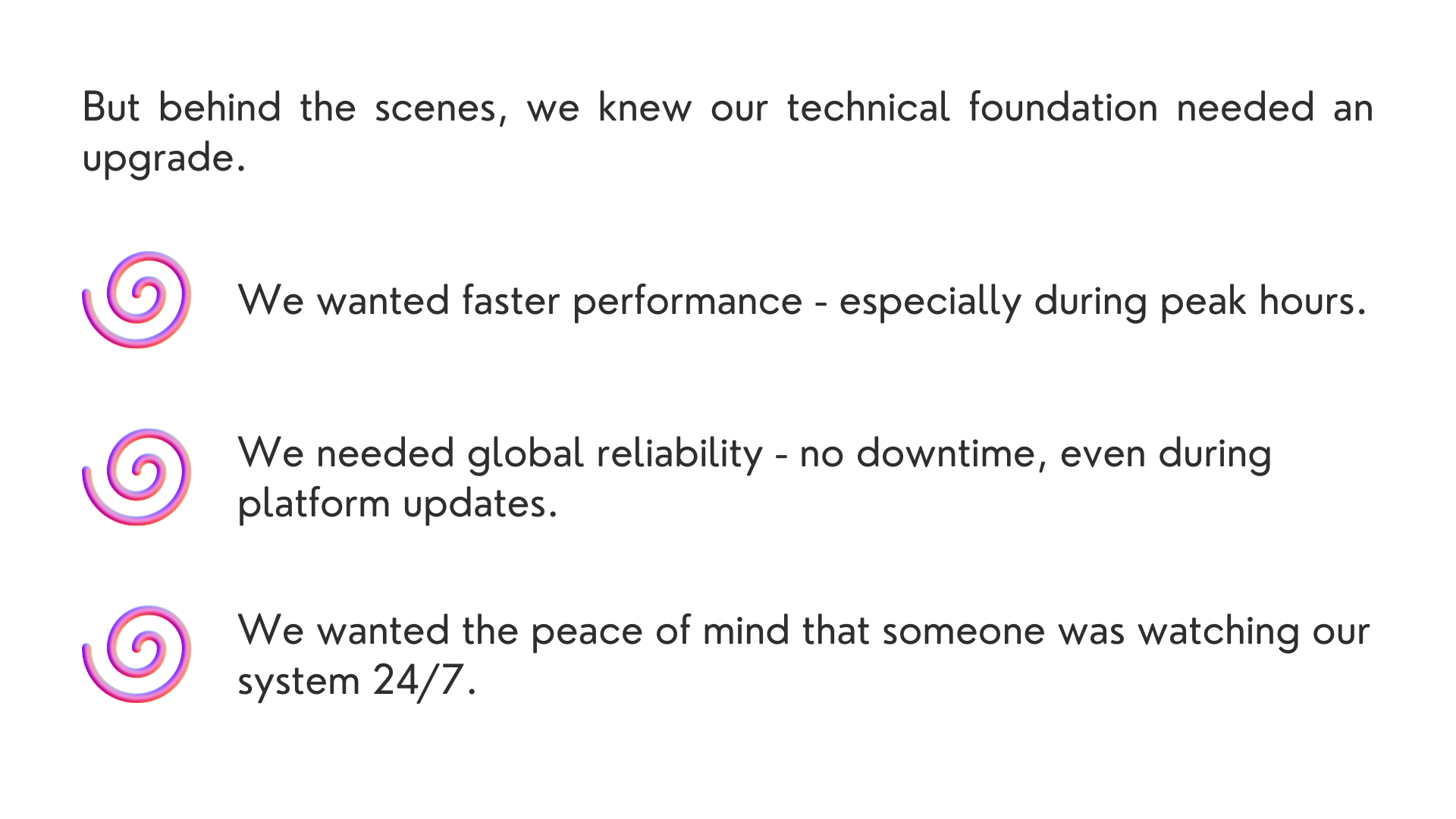
That’s when we partnered with Das Meta - an expert in infrastructure management and cloud solutions.

Why Das Meta


From the beginning, Das Meta impressed us with how deeply they understood the challenges of fast-growing platforms like ours. They didn’t just offer advice - they joined us as a partner.
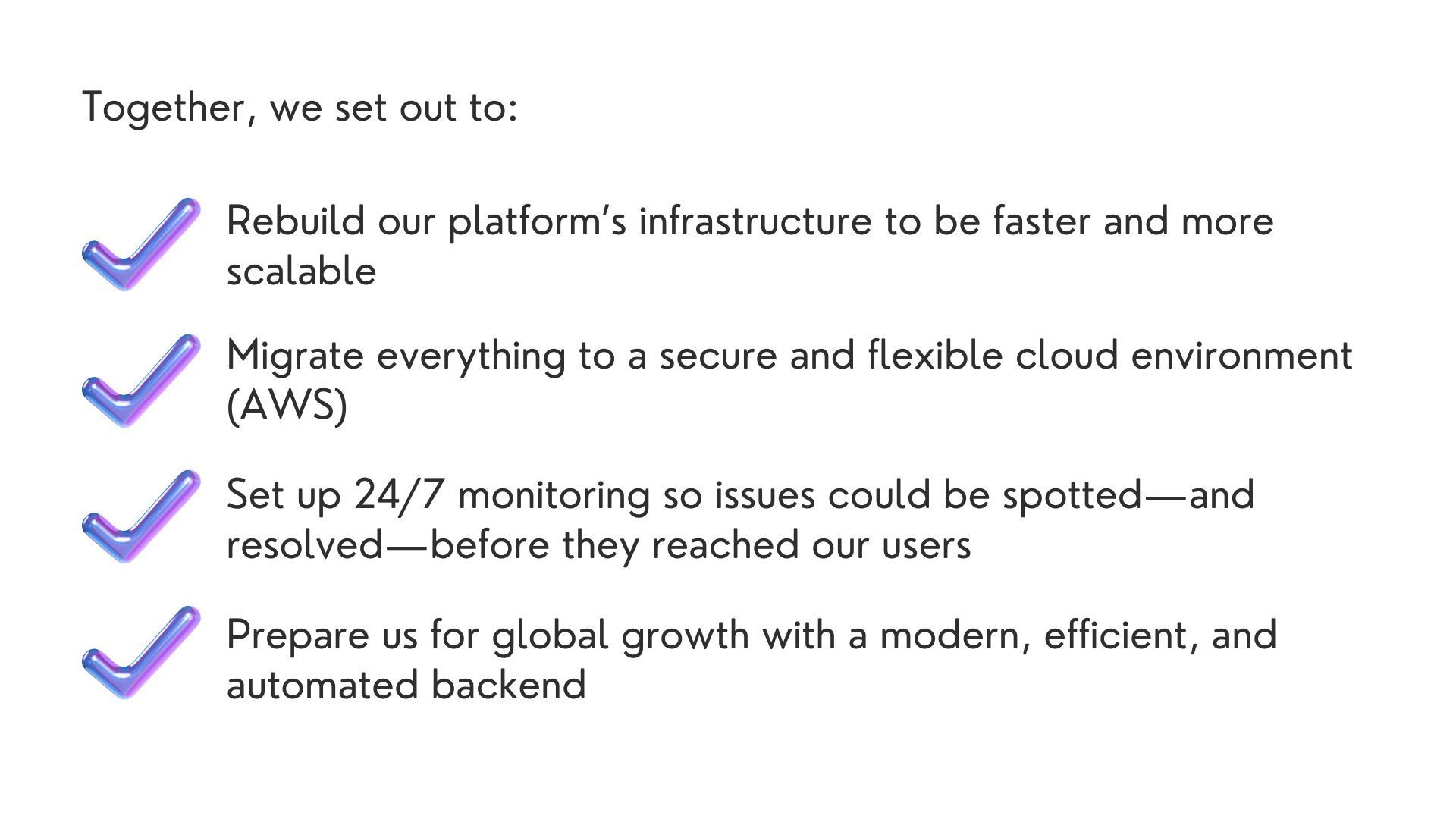
And the results speak for themselves.


What We Have Now
Perhaps most importantly, we now sleep better at night - because there’s a dedicated team keeping watch over our platform 24/7.


Built to Grow with Our Users


We’re proud to say that Tutor Platform is now better equipped than ever to support schools and tutors of all sizes - from small academies to large, multi-branch education centers. Whether you're teaching 10 students or 1,000, we’ve built a platform that grows with you.


Our infrastructure is no longer a bottleneck - it’s a superpower.


Looking Ahead


As we continue to add new features, expand into new regions, and support more educators, we know we have the technical foundation to support it all - without slowing down or sacrificing user experience.


Our collaboration with Das Meta wasn’t just about technology. It was about trust, partnership, and building for the future.


If you’re an educator or school looking for a stable, all-in-one tutoring platform


You can count on us. Because now, we can count on our platform.
By Mariam Danielyan January 5, 2026
What 2025 Taught Us About Building Digital Learning When we look back at 2025, what stands out most isn't a single feature launch or milestone. It's how much our understanding of digital learning changed by working closely with educators, managers, and learning teams. This year wasn't about building faster. It was about building more honestly, based on how teaching actually happens. What follows is a reflection on what we learned, what surprised us, and how those lessons are shaping the future of Tutor Platform. Why We're Looking Back at 2025 In education technology, there’s a constant push to move forward: new tools, new features, new promises. But meaningful progress requires pause; moments to reflect on what’s working, what isn’t, and why. For Tutor Platform , 2025 was a year where assumptions met reality. We didn’t just ship product updates. We worked side by side with educators as they tried to move their learning materials, assignments, and workflows into a digital environment. And through that process, we learned that digital learning isn’t primarily a technical challenge. It’s an operational one. Looking back at the year helps us make sense of that shift — and share what building with educators has taught us. Digital Learning Starts With Teachers, Not Tools Much of the conversation around digital learning focuses on learners: engagement, accessibility, and outcomes. These are all critical. But 2025 reinforced something fundamental for us: If a digital learning experience doesn’t work for teachers, it won’t work for learners either. Teachers are the ones preparing materials, updating content, reviewing assignments, and responding to questions. When their workflows are fragmented or overly complex, the learning experience downstream suffers — no matter how polished the platform looks. This insight directly builds on what we explored earlier in Designing E-Learning for Everyone. Inclusive and effective learning design isn’t just about who can access content — it’s about who can manage it without burning out. In 2025, we saw firsthand how much invisible work sits behind every lesson. And we realized that improving teacher experience isn’t a “nice to have.” It’s the foundation. Content Became the Biggest Bottleneck One of the biggest surprises this year was where most of the friction lived. It wasn’t in teaching itself. It wasn’t even about using new technology. It was in managing content. Most institutions we worked with already had good materials: books, PDFs, presentations, exercises, and notes built over the years. The challenge wasn’t quality — it was structure.
By Mariam Danielyan December 22, 2025
Behind the Scenes: From Books to Digital Learning In our previous blog, "Designing E-learning for Everyone," we explored what makes digital learning truly work - accessibility, clarity, flexibility, and thoughtful design for different types of learners. This article is the next chapter of that story. Over the past few months, we’ve been working closely with one of our clients - a school with a dedicated group of teachers to help them move from printed books and scattered PDFs to a single, structured digital learning environment using Tutor Platform. What follows is not a polished success story, but a real behind-the-scenes look at what it actually takes to digitalize learning materials in a way that supports teachers, students, and managers alike. The Starting Point: When Learning Materials Live Everywhere Before the transition, the school's learning content was spread across multiple formats and tools:
By Mariam Danielyan November 19, 2025
Inclusive, Accessible & Mobile-Ready Education
Show More