The Rise of Lifelong Learning

The World Moves Faster Than Our Degrees

Ten years ago, a university diploma could carry you comfortably through most of your career. Today? Entire industries transform in the time it takes to update a LinkedIn headline.


AI reshapes how marketers work. Healthcare workers need new digital tools every year. Even logistics and manufacturing are becoming data-driven. The shelf life of knowledge is shrinking fast.


Here’s a quick check-in for you:
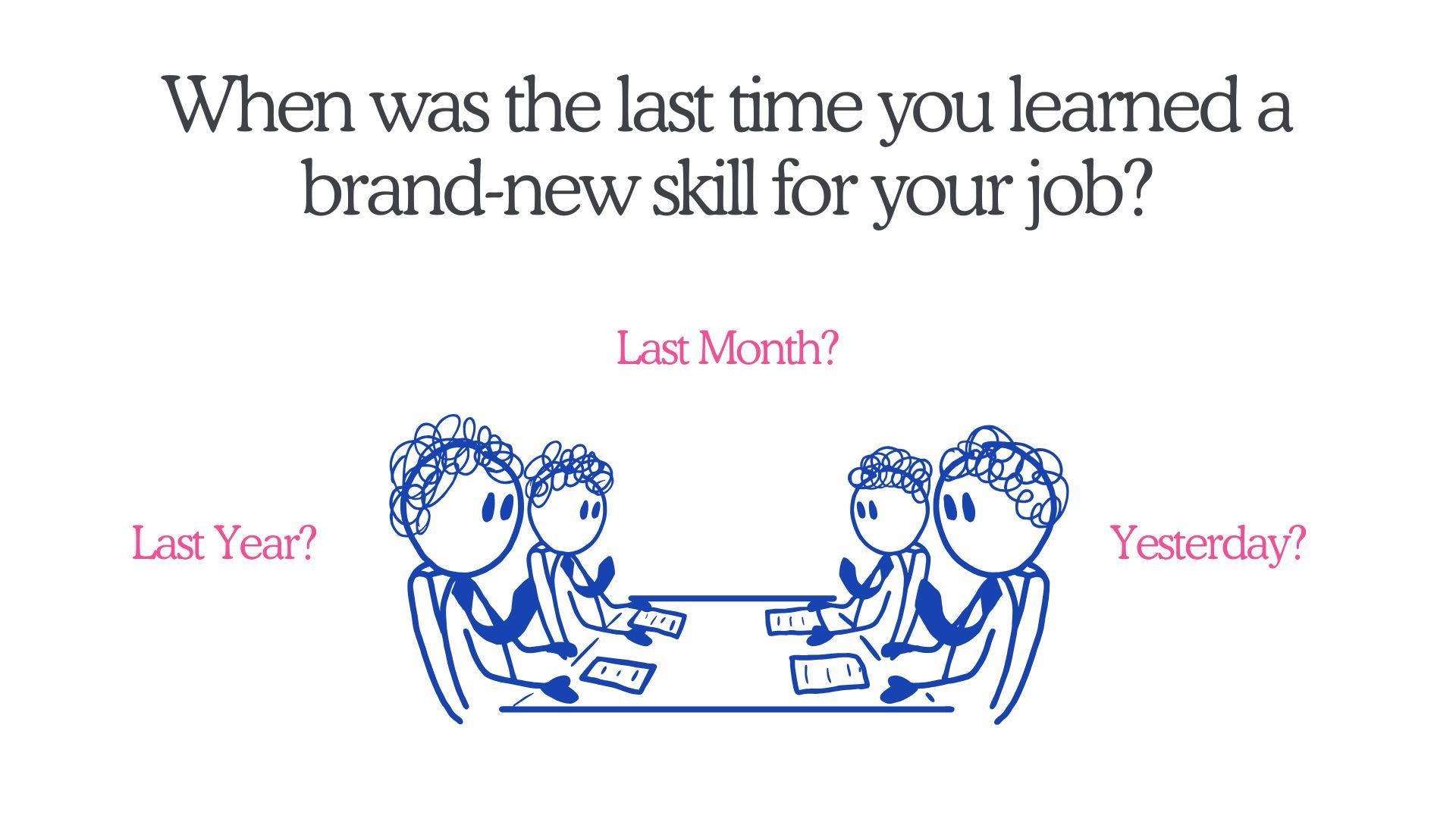

If it wasn’t yesterday, you’re already behind someone who did. That’s why lifelong learning isn’t a buzzword anymore. It’s survival.


Why Traditional Learning Doesn’t Cut It Anymore


Most of us grew up with a model: school, degree, career. Maybe a workshop or two along the way. But that model doesn’t fit the pace of today’s work anymore.
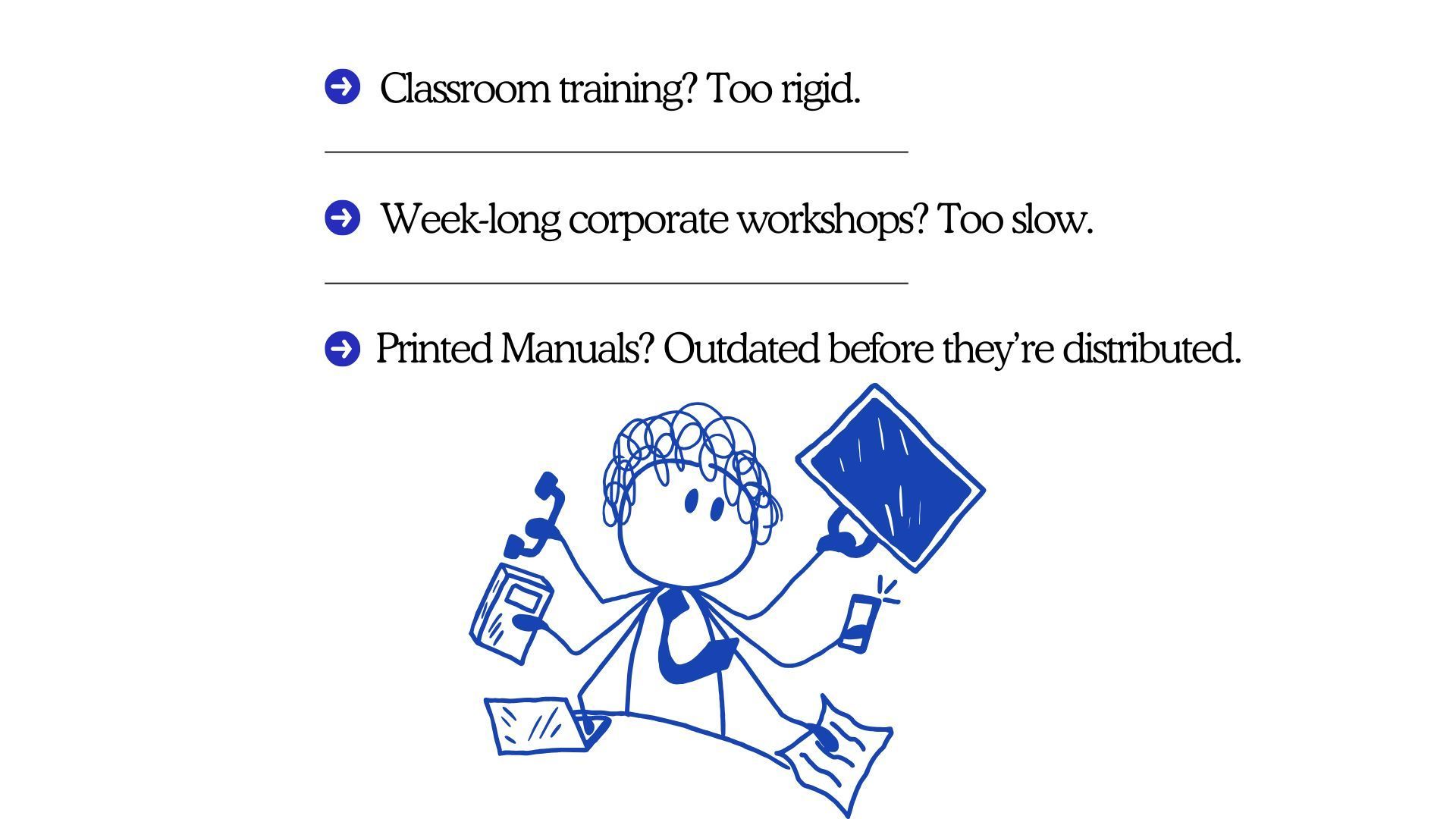
And let’s be honest: nobody is sitting through 200-slide PowerPoint marathons when they could learn in short, engaging bursts on their phone.


Enter Learning Platforms: A Game-Changer for Skills

The rise of learning platforms isn’t just about convenience: it’s about survival, growth, and opportunity.


Here’s why they’re winning:
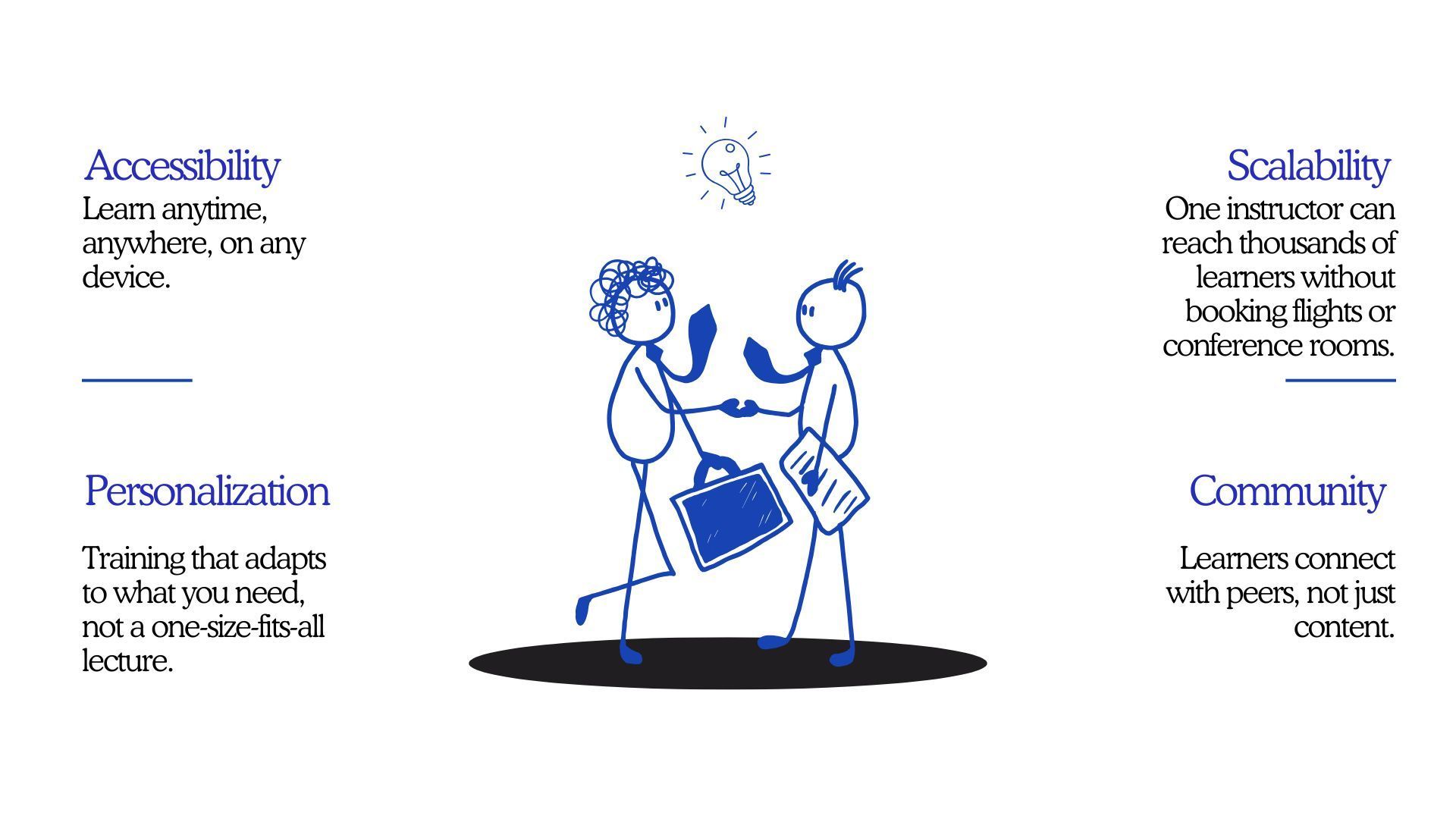
💡 One HR team in Berlin used a platform to launch a leadership program for 300 managers across Europe - all digital, no hotels, no travel, no lost working days.


That’s the power of platforms.


What It Means for Professionals


For individuals, platforms are like career gyms. You don’t just “get fit once” and stop; you keep training, adding new muscles (skills) as the market shifts.


Imagine:

  • A marketing manager picking up data analytics to stay valuable in a digital-first team.
  • A teacher learning online classroom tools to connect with students beyond walls.
  • A coach turning in-person workshops into a subscription-based online academy.

Each of them isn’t just learning: they’re future-proofing their careers.


What It Means for Organizations


Companies benefit just as much — maybe more.

  • Upskilling beats hiring. It’s faster and cheaper to retrain employees than replace them.
  • Continuous training builds loyalty. Employees stay where they grow.
  • Digital tools scale learning. Training isn’t limited to who fits in a room - it’s global.

In fact, companies that make lifelong learning part of their culture don’t just adapt - they lead.
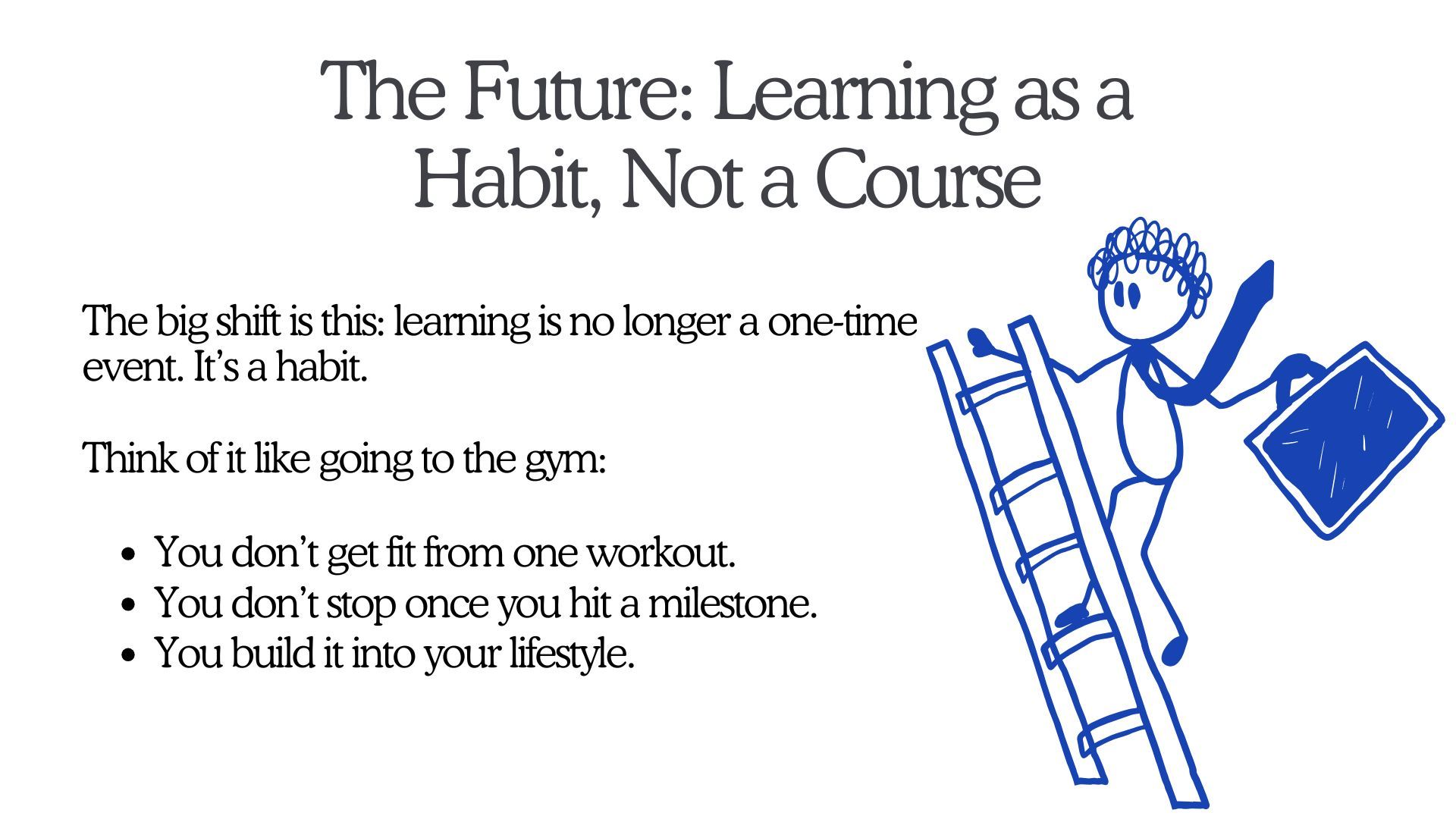
The same applies to skills. Professionals who treat learning as part of their weekly routine will always stay relevant. Organizations that build platforms for continuous learning will always stay competitive.


Your Takeaway

If you’re a professional → choose one new skill every quarter and commit to it.

If you’re a training provider, HR leader, or educator → start mapping a digital learning roadmap, not just a yearly workshop plan.


How Tutor Platform Fits In


At Tutor Platform, we see this shift every day. Trainers, coaches, and organizations are turning continuous learning into a competitive advantage by digitizing their knowledge and scaling it globally.


Whether it’s a small training center moving online or a large organization building custom programs, the goal is the same: make learning part of the everyday workflow.


If you want to explore how digital learning platforms can keep your team - or your clients - ahead of the curve, we’d love to have that conversation.
By Mariam Danielyan January 5, 2026
What 2025 Taught Us About Building Digital Learning When we look back at 2025, what stands out most isn't a single feature launch or milestone. It's how much our understanding of digital learning changed by working closely with educators, managers, and learning teams. This year wasn't about building faster. It was about building more honestly, based on how teaching actually happens. What follows is a reflection on what we learned, what surprised us, and how those lessons are shaping the future of Tutor Platform. Why We're Looking Back at 2025 In education technology, there’s a constant push to move forward: new tools, new features, new promises. But meaningful progress requires pause; moments to reflect on what’s working, what isn’t, and why. For Tutor Platform , 2025 was a year where assumptions met reality. We didn’t just ship product updates. We worked side by side with educators as they tried to move their learning materials, assignments, and workflows into a digital environment. And through that process, we learned that digital learning isn’t primarily a technical challenge. It’s an operational one. Looking back at the year helps us make sense of that shift — and share what building with educators has taught us. Digital Learning Starts With Teachers, Not Tools Much of the conversation around digital learning focuses on learners: engagement, accessibility, and outcomes. These are all critical. But 2025 reinforced something fundamental for us: If a digital learning experience doesn’t work for teachers, it won’t work for learners either. Teachers are the ones preparing materials, updating content, reviewing assignments, and responding to questions. When their workflows are fragmented or overly complex, the learning experience downstream suffers — no matter how polished the platform looks. This insight directly builds on what we explored earlier in Designing E-Learning for Everyone. Inclusive and effective learning design isn’t just about who can access content — it’s about who can manage it without burning out. In 2025, we saw firsthand how much invisible work sits behind every lesson. And we realized that improving teacher experience isn’t a “nice to have.” It’s the foundation. Content Became the Biggest Bottleneck One of the biggest surprises this year was where most of the friction lived. It wasn’t in teaching itself. It wasn’t even about using new technology. It was in managing content. Most institutions we worked with already had good materials: books, PDFs, presentations, exercises, and notes built over the years. The challenge wasn’t quality — it was structure.
By Mariam Danielyan December 22, 2025
Behind the Scenes: From Books to Digital Learning In our previous blog, "Designing E-learning for Everyone," we explored what makes digital learning truly work - accessibility, clarity, flexibility, and thoughtful design for different types of learners. This article is the next chapter of that story. Over the past few months, we’ve been working closely with one of our clients - a school with a dedicated group of teachers to help them move from printed books and scattered PDFs to a single, structured digital learning environment using Tutor Platform. What follows is not a polished success story, but a real behind-the-scenes look at what it actually takes to digitalize learning materials in a way that supports teachers, students, and managers alike. The Starting Point: When Learning Materials Live Everywhere Before the transition, the school's learning content was spread across multiple formats and tools:
By Mariam Danielyan November 19, 2025
Inclusive, Accessible & Mobile-Ready Education
Show More