Inclusive, Accessible & Mobile-Ready Education
The Invisible Pain of Modern Corporate Learning
Imagine this: you're a Learning Director at a fast-growing tech company. You've invested in a shiny new LMS. You've built an onboarding program. You've hired internal trainers and designed product courses.
And yet - when you pull reports, something still feels off. Engineers crash on the first module. Compliance courses never finish. Mobile engagement remains unusually low. No one's talking about learning in their 1:1s.
It's not a lack of ambition that holds you back. It's the architecture of your learning system.
Most learning systems today are "digitized" - but very few are truly transformed. They lack the integration layers and experience design required for accessible, mobile, scalable learning.
That's where a modern, inclusive SaaS LMS comes in. At Tutor Platform, we believe real transformation starts when your learning system is built for everyone: your developers, your sales team, your remote workforce, and even your mobile-first field team.
What We Mean by Inclusive, Accessible, Mobile-Ready Learning
At its core, inclusive and mobile-ready learning empowers every employee - no matter where they work or what device they use - to access meaningful, high-quality training.
In short:
Inclusive, accessible, mobile-ready learning means building a digital learning ecosystem where every learner - regardless of bandwidth, device, ability, or location - can engage, learn, and succeed.
This isn't just about usability. It's about removing barriers. It's about giving people the freedom to learn how they want, where they want.
Why This Matters for Corporate & Tech Learning Leaders
The Skills Gap Isn't Waiting
In product companies and consultancies alike, the learning needs of employees are evolving rapidly. Engineers need to adopt new stacks. Project managers need training in agile methodologies. Compliance, leadership, and nearly every corporate discipline demand continuous updating.
But traditional LMS platforms weren't designed for that level of agility.
Fragmentation Frustrates Everyone
L&D teams know this well: courses are spread across video platforms, compliance hubs, knowledge bases, and onboarding engines. When systems don't talk to each other, learners lose momentum - and managers lose visibility.
With a SaaS LMS built for integration, you break down those silos. APIs, SCORM/xAPI, and LTI make it possible to connect learning tools into a unified, coherent ecosystem.
People Learn from Where They Are
In today's hybrid world, not everyone logs in from a laptop. Many do from a phone. For global teams or field-based staff, mobile-first and even offline capabilities aren't luxuries. They're necessities.
Accessibility Isn't Optional
Ensuring compliance with accessibility standards (e.g., WCAG) is no longer just “nice to have.” For global corporations, legal frameworks and ethical commitments demand it. An LMS must account for screen readers, keyboard navigation, captions, and more.
Data Driven Strategy
Want to know which courses drive performance? Or where your learners get stuck? Analytics must be baked in. Real-time dashboards, team-level insights, progress tracking — these are the tools that turn learning into strategy.
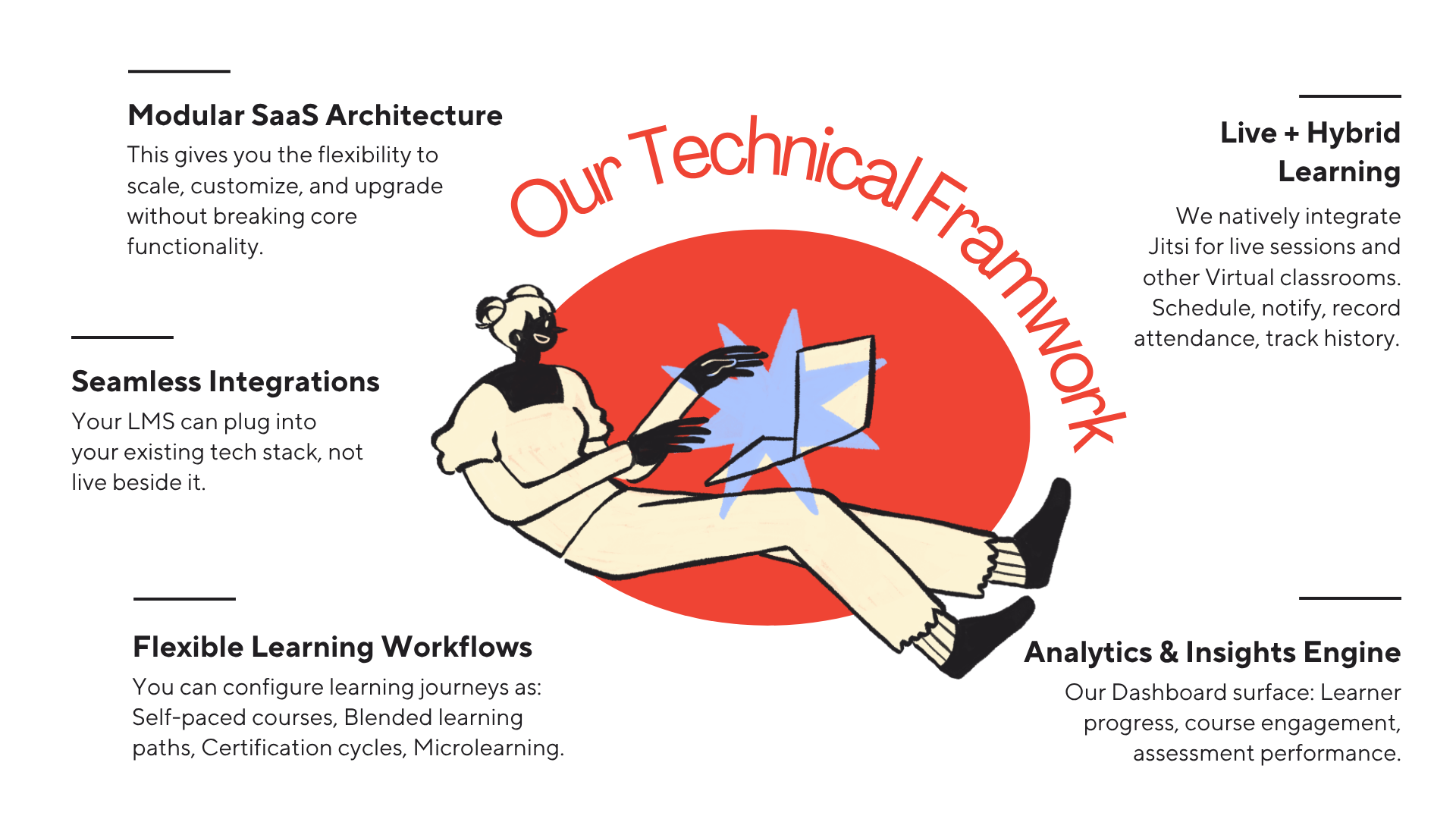
How Tutor Platform Makes This Real: Our Technical Framework
Here's how we built our system to support truly inclusive, scalable, enterprise-grade learning.
Pitfalls We See Too Often (and How to Avoid Them)
- Treating LMS as a static repository. Learning platforms must evolve.
- Over-customizing. Custom code = technical debt. Configurations = scalability.
- Ignoring standards. Without SCORM/xAPI/LTI, integrations fall apart.
- Skimping on mobile. If your learners can't take courses on their phones, adoption suffers.
- Delaying accessibility. Accessibility isn't a feature - it's a foundation.
Real Impact: What This Looks Like in Practice
Case Story: EBRD Corporate Training Flow
We worked with the European Bank for Reconstruction and Development (EBRD) to build a self-paced, structured learning ecosystem:
- Role-based paths for compliance, leadership, and technical training
- Interactive content + assessments + certification
- Analytics to track progress and completion
- A mobile-friendly experience
Results?
- Faster, smoother onboarding
- Higher completion rates
- Centralized visibility for L&D leaders
- Real-time learning data that ties back to performance metrics
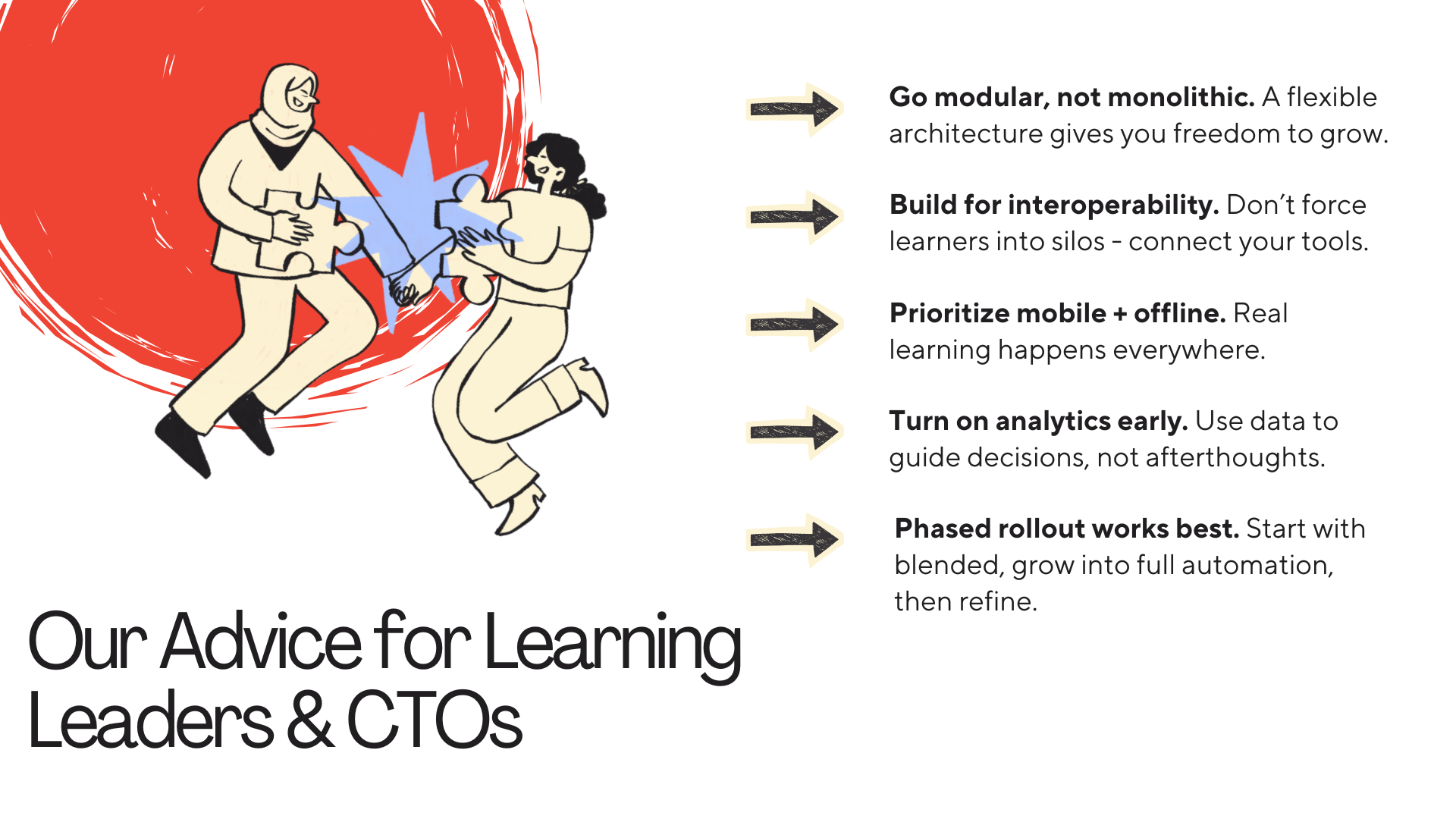
Final Thought: What If Your LMS Was a Living Ecosystem?
Imagine a learning system that adapts as fast as your business.
A platform that works for field staff, execs, engineers, and remote teams - on any device.
A system where data fuels transformation, not just reporting.
That’s the future we’re building with Tutor Platform.
When you design for
everyone - not just the “average learner” - learning stops being a cost center and becomes a competitive advantage.