What 2025 Taught Us About Building Digital Learning
When we look back at 2025, what stands out most isn't a single feature launch or milestone.
It's how much our understanding of digital learning changed by working closely with educators, managers, and learning teams.
This year wasn't about building faster.
It was about building more honestly, based on how teaching actually happens.
What follows is a reflection on what we learned, what surprised us, and how those lessons are shaping the future of Tutor Platform.
Why We're Looking Back at 2025
In education technology, there’s a constant push to move forward: new tools, new features, new promises. But meaningful progress requires pause; moments to reflect on what’s working, what isn’t, and why.
For Tutor Platform, 2025 was a year where assumptions met reality.
We didn’t just ship product updates.
We worked side by side with educators as they tried to move their learning materials, assignments, and workflows into a digital environment. And through that process, we learned that digital learning isn’t primarily a technical challenge.
It’s an operational one.
Looking back at the year helps us make sense of that shift — and share what building with educators has taught us.
Digital Learning Starts With Teachers, Not Tools
Much of the conversation around digital learning focuses on learners: engagement, accessibility, and outcomes. These are all critical. But 2025 reinforced something fundamental for us:
If a digital learning experience doesn’t work for teachers, it won’t work for learners either.
Teachers are the ones preparing materials, updating content, reviewing assignments, and responding to questions. When their workflows are fragmented or overly complex, the learning experience downstream suffers — no matter how polished the platform looks.
This insight directly builds on what we explored earlier in Designing E-Learning for Everyone. Inclusive and effective learning design isn’t just about who can access content — it’s about who can manage it without burning out.
In 2025, we saw firsthand how much invisible work sits behind every lesson. And we realized that improving teacher experience isn’t a “nice to have.” It’s the foundation.
Content Became the Biggest Bottleneck
One of the biggest surprises this year was where most of the friction lived.
It wasn’t in teaching itself.
It wasn’t even about using new technology.
It was in managing content.
Most institutions we worked with already had good materials: books, PDFs, presentations, exercises, and notes built over the years. The challenge wasn’t quality — it was structure.
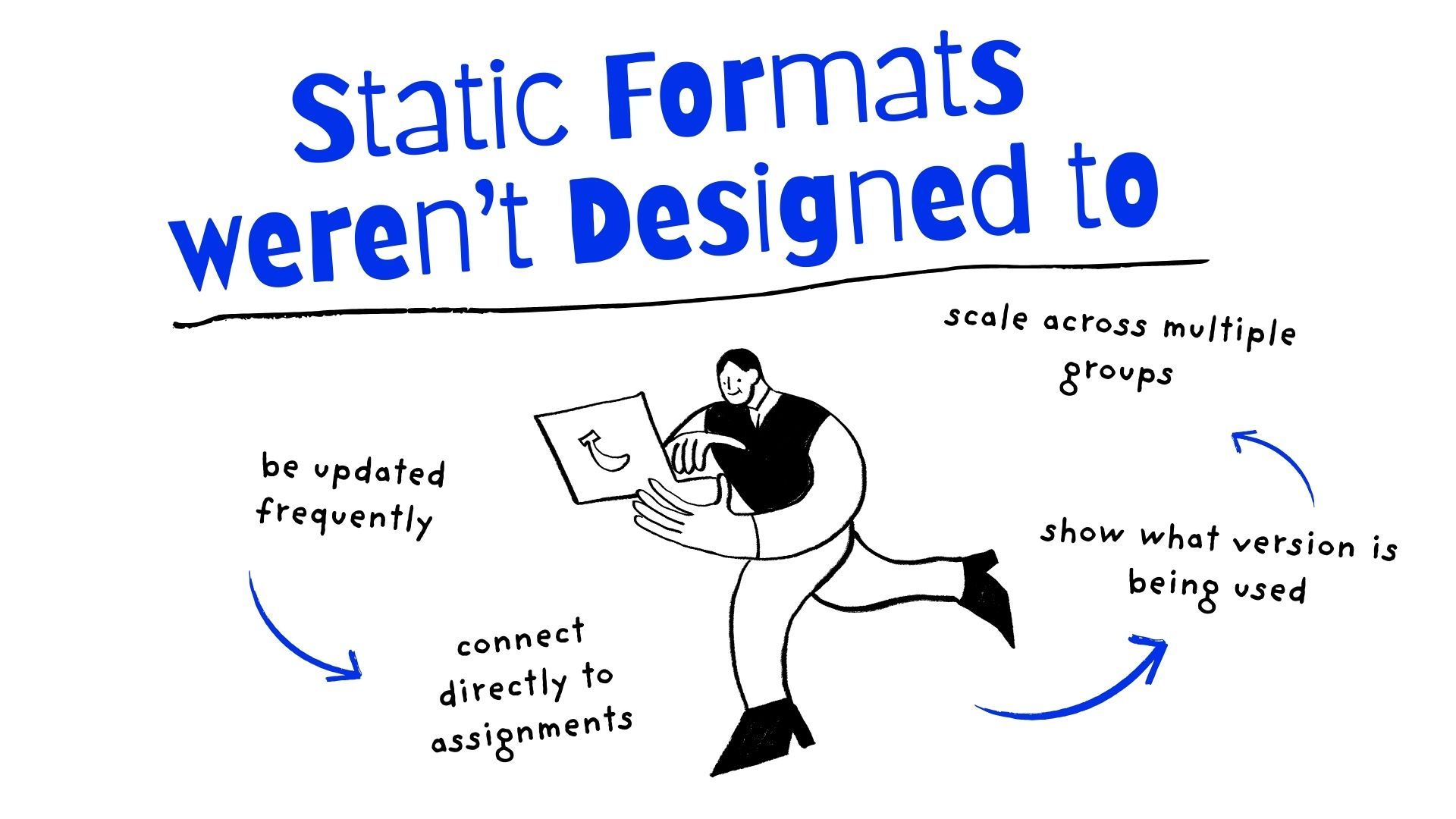
As a result, teachers spent hours reformatting the same content, resending files, clarifying where materials live, and manually tracking changes. Going “digital” often meant adding layers of work instead of removing them.
By mid-year, it became clear: content wasn’t just part of the problem, it was the main bottleneck.
What Changed When Content Became Structured
When learning materials moved into a structured digital environment, something important shifted.
Teachers didn’t suddenly teach more hours.
They repeated themselves less.
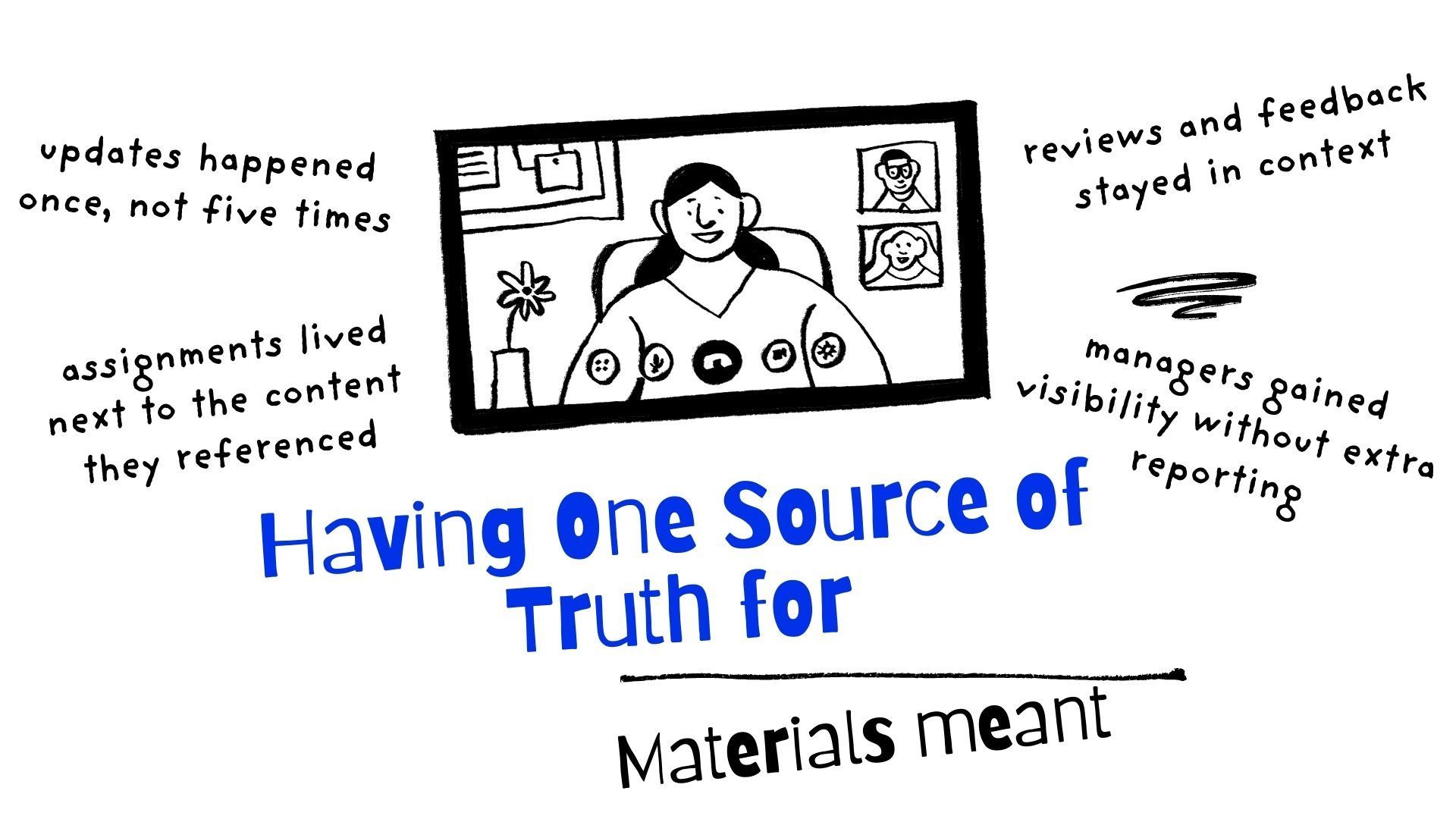
Instead of chasing files, teachers could focus on improving lessons. Instead of wondering which version students had, everyone worked from the same materials.
The biggest change wasn’t efficiency for its own sake.
It was clarity.
And clarity, we learned, is one of the most undervalued elements in digital learning.
What Working With Educators Taught Us
2025 reinforced how much better products become when educators are part of the process, not just users at the end.
Working closely with teachers and managers challenged several assumptions we had early on. Features we thought would be central turned out to matter less than small workflow improvements. Things we underestimated, like content updates and review processes, turned out to be critical.
We also learned that educators don’t want “magic buttons.”
They want tools that respect their expertise and fit naturally into how they already think about teaching.
This feedback reshaped how we prioritize, design, and communicate. It pushed us to focus less on what’s technically possible and more on what’s pedagogically useful.
Early Signals From 2025
While we’re still early in our journey, 2025 gave us encouraging signals that we’re moving in the right direction.
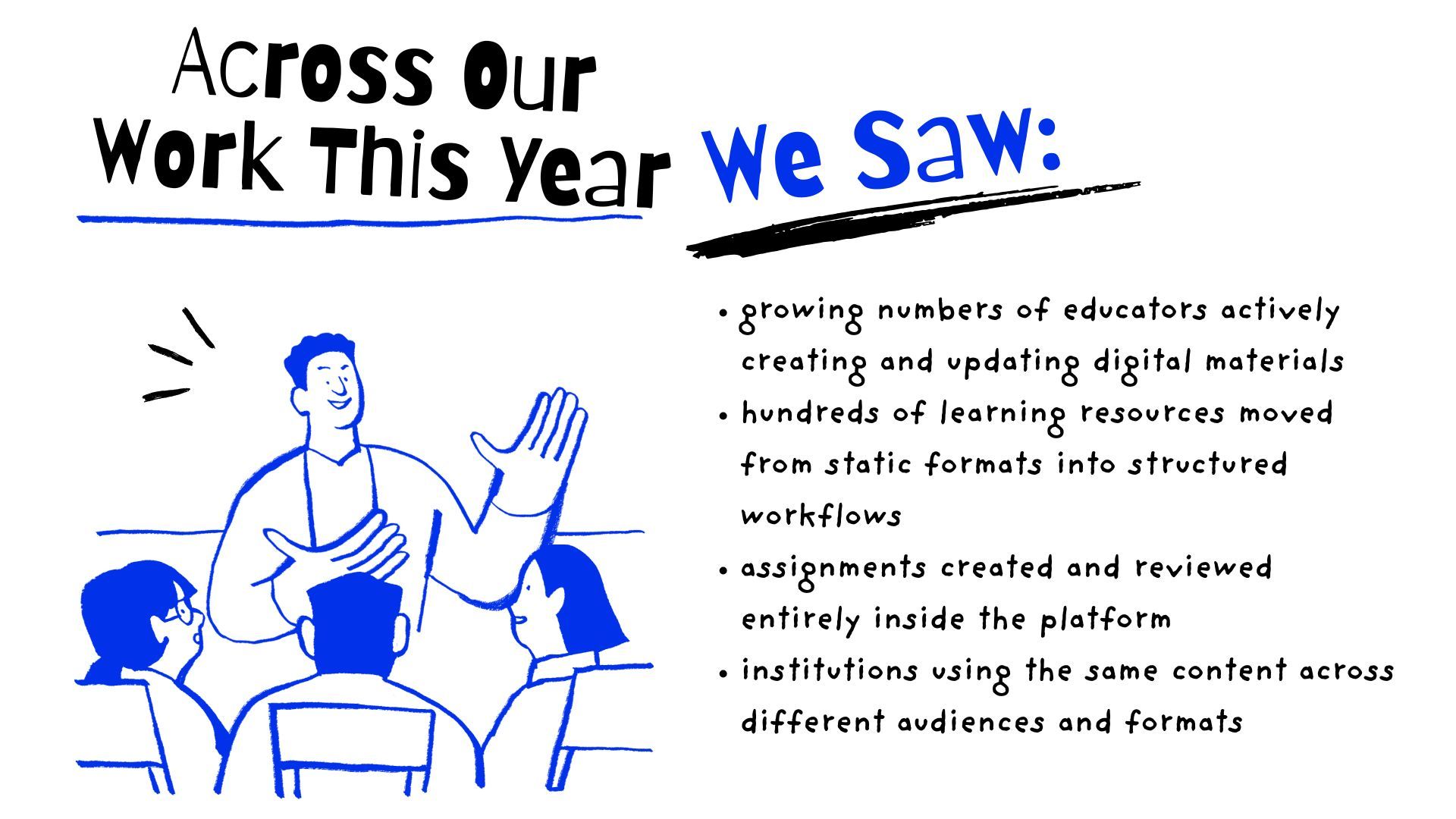
More importantly, feedback consistently pointed to time saved on preparation and management, time that could be redirected back to teaching.
These aren’t final results. They’re early indicators.
But they confirm that focusing on structure and workflow matters.
Why We’re Building Structured AI Support Next
As content creation emerged as the main bottleneck, one question kept coming up:
How can we reduce repetitive work without taking control away from educators?
Our answer isn’t generic AI generation.
It’s structured AI support.
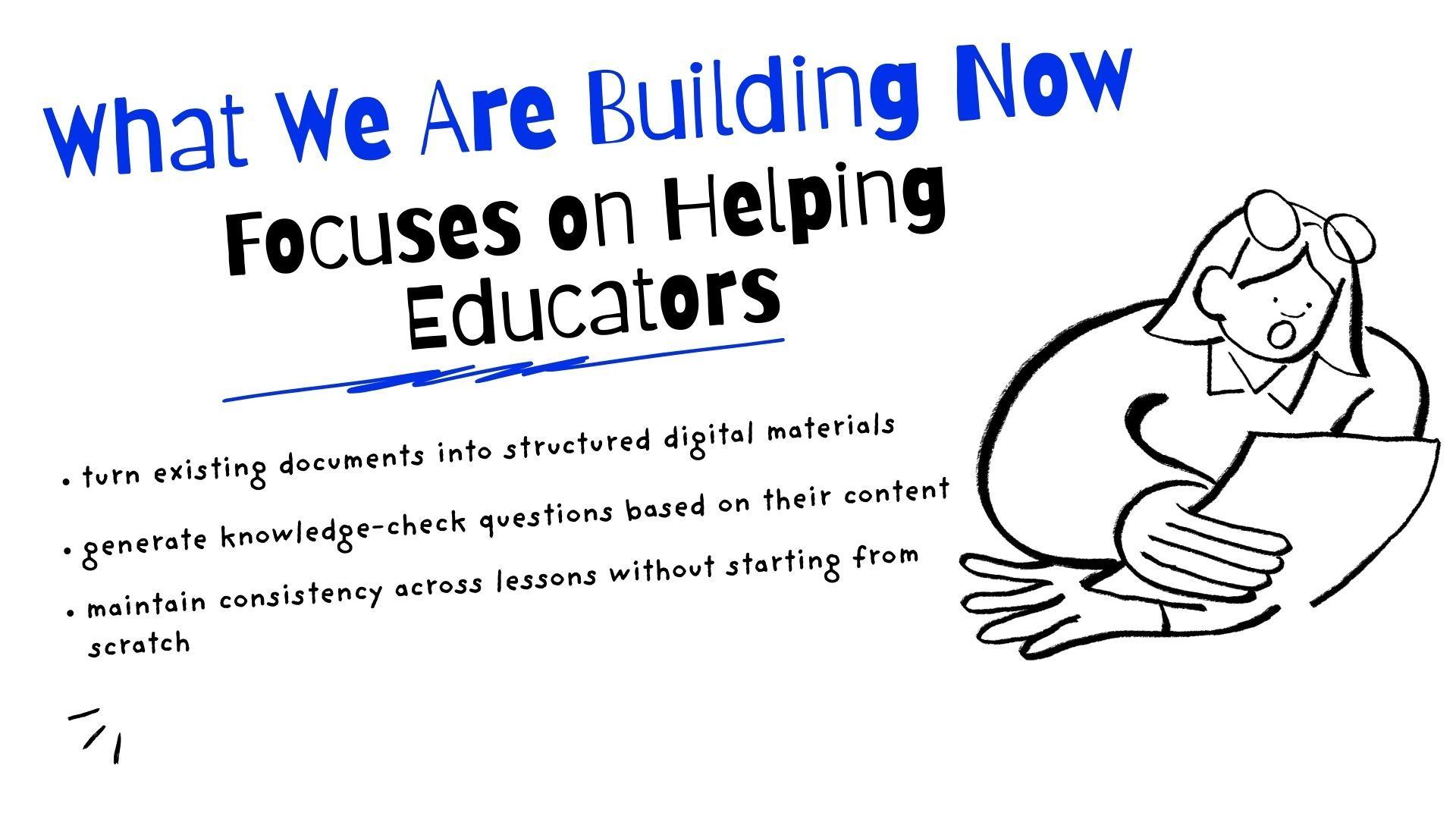
The keyword here is structure.
AI shouldn’t decide what to teach or how to teach it. But it can help with organization, formatting, and first drafts, especially when guided by clear prompts designed for educational contexts.
This work is still in progress, and we’re intentionally building it alongside educators. Their feedback will shape how far and how responsibly this support goes.
What We’re Taking Into 2026
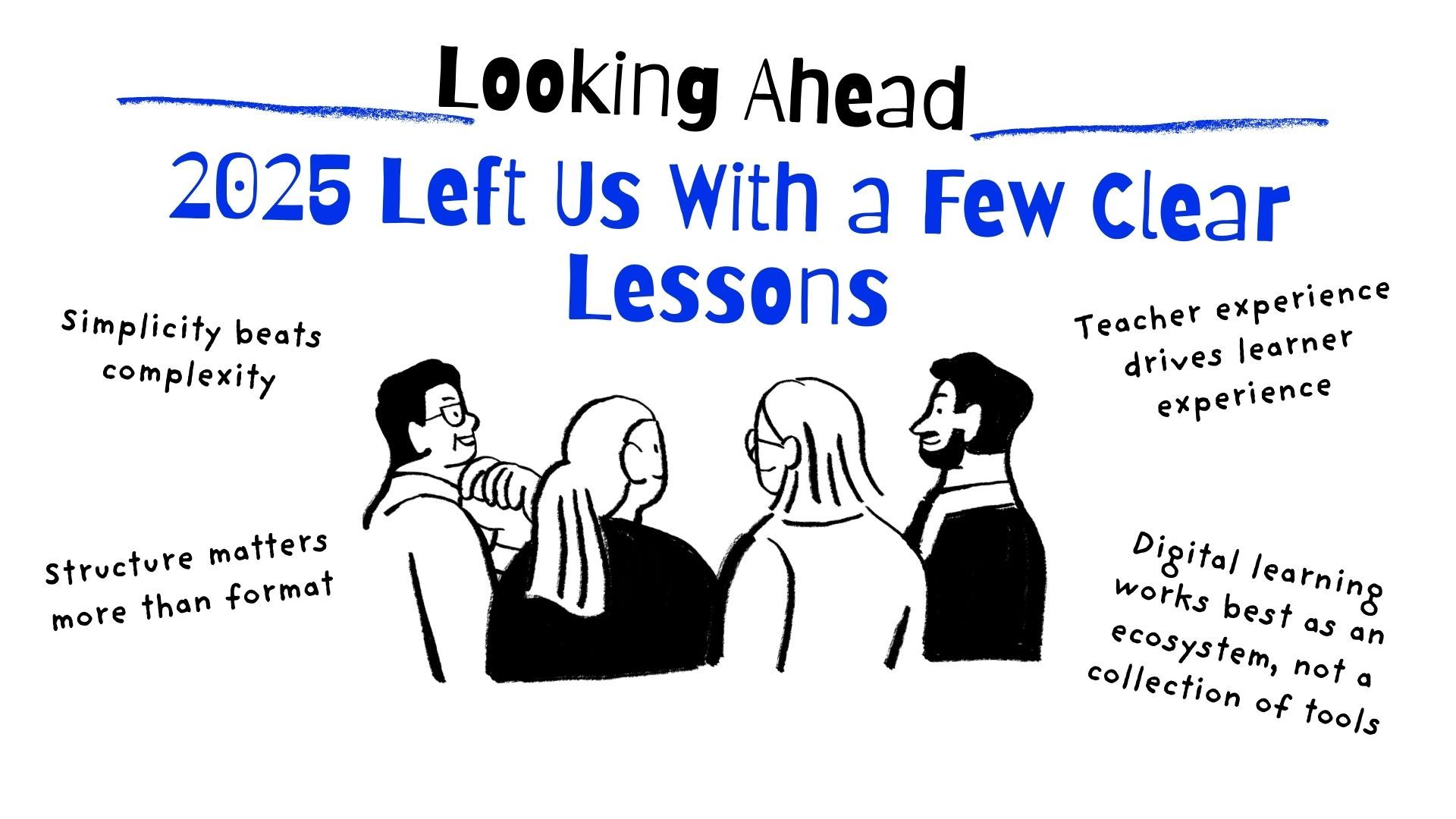
These principles are guiding everything we build next, from product decisions to how we collaborate with partners and institutions.
Thank You to the Educators Who Built With Us
None of what we learned in 2025 would have been possible without educators who shared their time, frustrations, and ideas with us.
You didn’t just use Tutor Platform, you helped shape it.
As we move forward, we’re committed to continuing that collaboration, listening closely, and building digital learning tools that genuinely support the people behind education.
If 2025 taught us anything, it’s this:
The future of digital learning is built together.